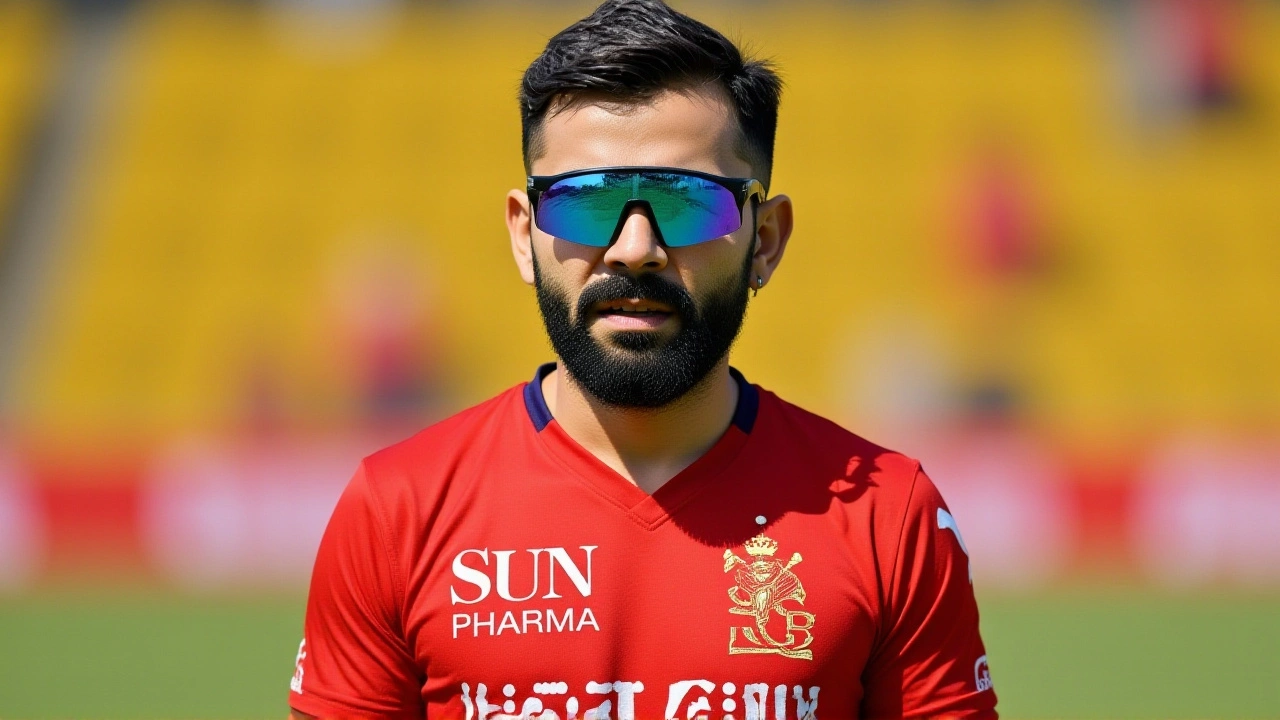
It’s official: the dust has settled on the league stage of Indian Premier League 2026, and the race for the top four is tighter than ever. Royal Challengers Bengaluru (RCB) stormed to the summit with 18 points, securing the coveted number one spot. But here’s the twist—three other teams tied them on points, making net run rate the ultimate tiebreaker in what turned out to be a nail-biting finish.
The tournament, dubbed "The Biggest Festival of Cricket," saw ten franchises battling it out across India. With only the top four advancing to the playoffs, every match mattered. And while RCB took the crown, the story isn’t just about who won—it’s about how they did it, and who got left behind.
The Top Four: A Three-Way Tie at 18 Points
Let’s break down the leaderboard. At the very top sits Royal Challengers Bengaluru, captained by Virat Kohli. They played 14 matches, winning 9 and losing 5, finishing with a healthy net run rate (NRR) of +0.783. That NRR proved crucial because two other teams matched their point tally.
In second place, also with 18 points, is Gujarat Titans. Led by Shubman Gill, GT mirrored RCB’s record: 9 wins, 5 losses. Their NRR was slightly lower at +0.695, which kept them below RCB but firmly in the playoff zone.
Third up is Sunrisers Hyderabad (SRH). They too finished with 18 points (9 wins, 5 losses), but their NRR of +0.524 placed them third. It’s a rare occurrence in IPL history where three teams end the league stage on identical points. The margin between first and third? Just 0.259 runs per over.
Completing the top four is Rajasthan Royals (RR). They secured qualification with 16 points—8 wins and 6 losses—and an NRR of +0.189. While not as flashy as the trio above, RR’s consistency ensured they avoided the heartbreak of missing out.
The Heartbreak: Who Missed Out?
If you’re a fan of Punjab Kings (PBKS), this one stings. They finished fifth with 15 points (7 wins, 6 losses, 1 no-result). An NRR of +0.309 wasn’t enough to leapfrog RR. One more win, or a better performance in a close game, and they’d be celebrating instead of consoling themselves.
Delhi Capitals (DC) started strong—winning their first three matches with an impressive NRR of +1.257—but faded badly. They finished sixth with 14 points (7 wins, 7 losses) and a negative NRR of -0.651. Early momentum means nothing if you can’t sustain it.
Seventh went to Kolkata Knight Riders (KKR), who managed 13 points (6 wins, 7 losses, 1 no-result) and an NRR of -0.147. For a three-time champion, this was a disappointing campaign.
Eighth place belongs to Chennai Super Kings (CSK). Under MS Dhoni, CSK struggled mightily, ending with just 12 points (6 wins, 8 losses) and an NRR of -0.345. Fans were hoping for a resurgence, but the results didn’t reflect that.
At the bottom are Mumbai Indians (MI) and Lucknow Super Giants (LSG), both with 8 points (4 wins, 10 losses). MI edged ahead of LSG solely due to a better NRR (-0.584 vs. -0.740). For five-time champions MI, this was a historic low.
How the Points System Works
For those new to the IPL, here’s how the scoring works:
- Win: 2 points
- Tie or No Result: 1 point each
- Loss: 0 points
When teams are tied on points, Net Run Rate (NRR) becomes the deciding factor. NRR is calculated by subtracting the average runs conceded per over from the average runs scored per over throughout the tournament. It’s why batting big and bowling tight matters even when you lose.
From Start to Finish: How the Table Evolved
Early in the tournament, the picture looked completely different. After just a few matches, Delhi Capitals sat atop the table with 6 points from 3 wins and an NRR of +1.257. Gujarat Titans and Royal Challengers Bengaluru were right behind them, also on 6 points.
Meanwhile, Mumbai Indians and Chennai Super Kings languished at the bottom with just 2 points each after 4-5 games. Fast forward to the end, and DC had slipped to sixth, while RCB climbed to first. The volatility of T20 cricket is real.
Matches were played across various venues, including the ACA Stadium in Guwahati and the Narendra Modi Stadium in Ahmedabad. Game 3 took place on March 30, 2026, in Guwahati, while Game 9 was held on April 4, 2026, in Ahmedabad. The schedule spanned late March to early April, setting the stage for high-stakes encounters.
What’s Next for the Playoffs?
The top two teams—RCB and GT—earn double chances to reach the final via Qualifier 1 and Qualifier 2. The third and fourth-placed teams (SRH and RR) must win an eliminator match to stay alive. This format rewards consistency and puts immense pressure on the top seeds.
With RCB defending their 2025 title, expectations are sky-high. Can Virat Kohli lead his team to back-to-back trophies? Or will Shubman Gill’s Gujarat Titans finally lift the cup after reaching the playoffs last year? Only time will tell.
Frequently Asked Questions
Who topped the IPL 2026 points table?
Royal Challengers Bengaluru (RCB) finished first with 18 points from 14 matches. They had 9 wins and 5 losses, with a net run rate of +0.783. Despite tying on points with Gujarat Titans and Sunrisers Hyderabad, RCB’s superior NRR secured them the top spot.
Which teams qualified for the IPL 2026 playoffs?
The top four teams qualified: Royal Challengers Bengaluru (1st), Gujarat Titans (2nd), Sunrisers Hyderabad (3rd), and Rajasthan Royals (4th). All except RR finished with 18 points; RR qualified with 16 points.
Why did Mumbai Indians finish ninth despite having the same points as Lucknow?
Both Mumbai Indians and Lucknow Super Giants finished with 8 points (4 wins, 10 losses). However, MI had a better net run rate (-0.584) compared to LSG’s -0.740, which placed them higher in the standings.
How does Net Run Rate affect the IPL points table?
Net Run Rate (NRR) is used as a tiebreaker when teams have equal points. It measures the difference between runs scored per over and runs conceded per over. A positive NRR indicates strong performance, while a negative one suggests struggles. In IPL 2026, NRR separated RCB, GT, and SRH, all of whom had 18 points.
Did any team start strong but fail to qualify?
Yes, Delhi Capitals began the tournament perfectly, winning their first three matches with an NRR of +1.257. However, they couldn’t maintain momentum, slipping to sixth place with 14 points and a negative NRR of -0.651 by the end of the league stage.
What is the playoff structure for IPL 2026?
The top two teams (RCB and GT) get two chances to reach the final through Qualifier 1 and Qualifier 2. The third and fourth-placed teams (SRH and RR) play an Eliminator match. The winner of the Eliminator faces the loser of Qualifier 1 in Qualifier 2 for a spot in the final.